Resources
Community Stories

My PNH Journey: The Power of a Diagnosis

By 
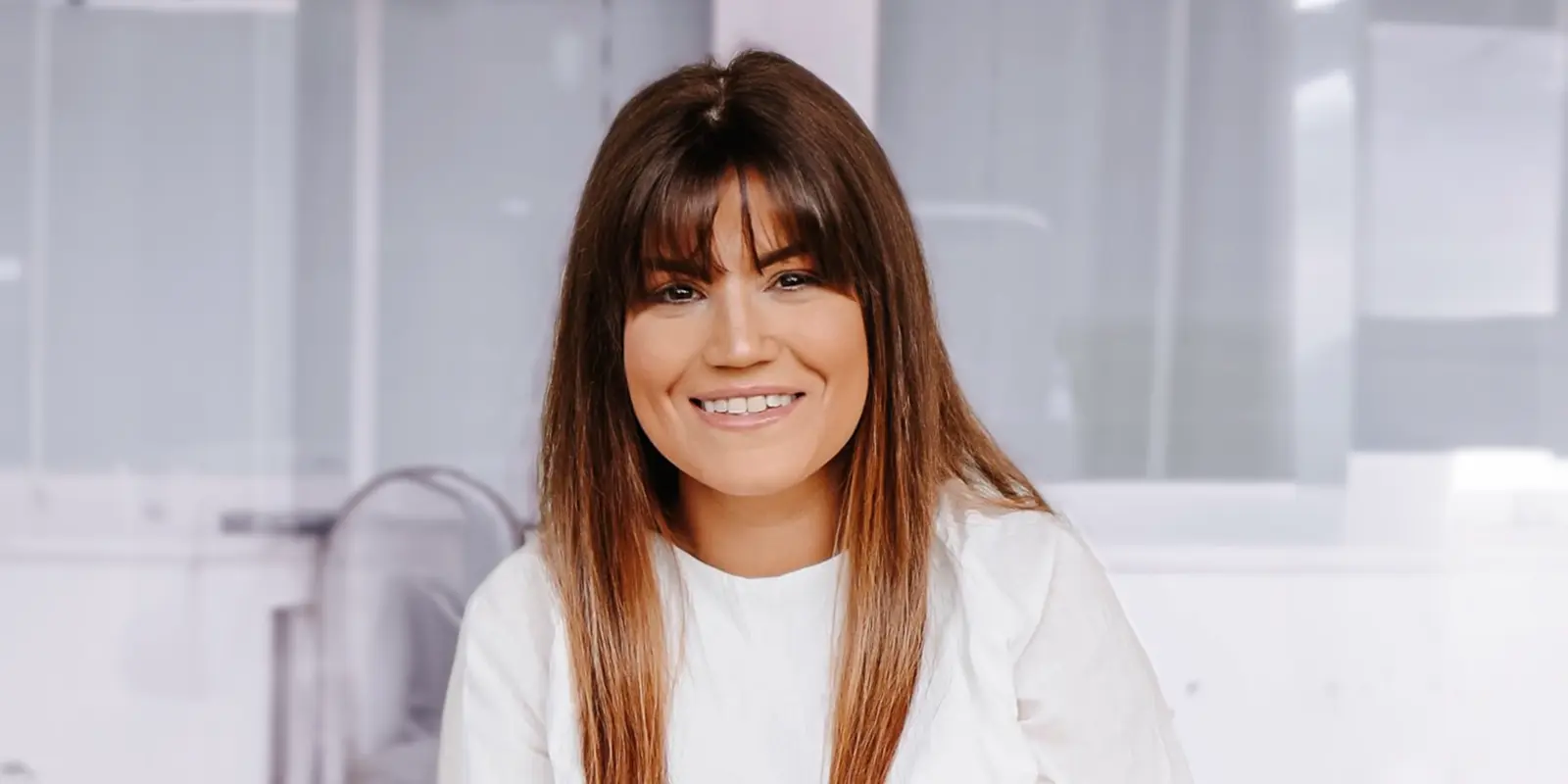
Maegan Voss

Feb 28, 2022 • 8 min read

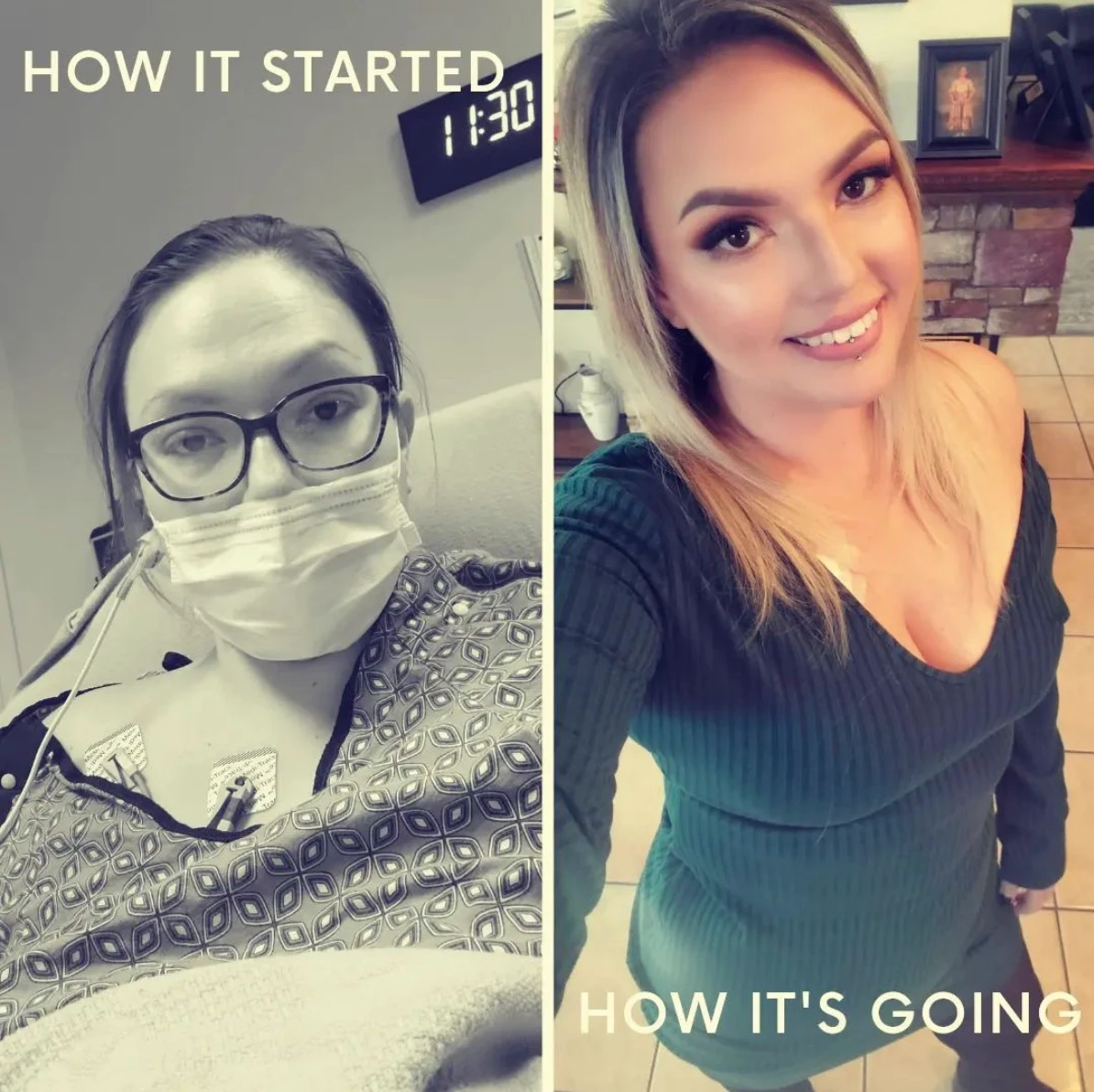
A few months ago, PicnicHealth asked me to write about my experience with my rare disease, paroxysmal nocturnal hemoglobinuria (PNH). At that point, back in November, I had just received a diagnosis after ten years of questioning my reality, and a new way of thinking had just begun to set in. A diagnosis can be such a vindictive thing, especially after such a long time, and it took me these past months to really come to terms with my new situation. 


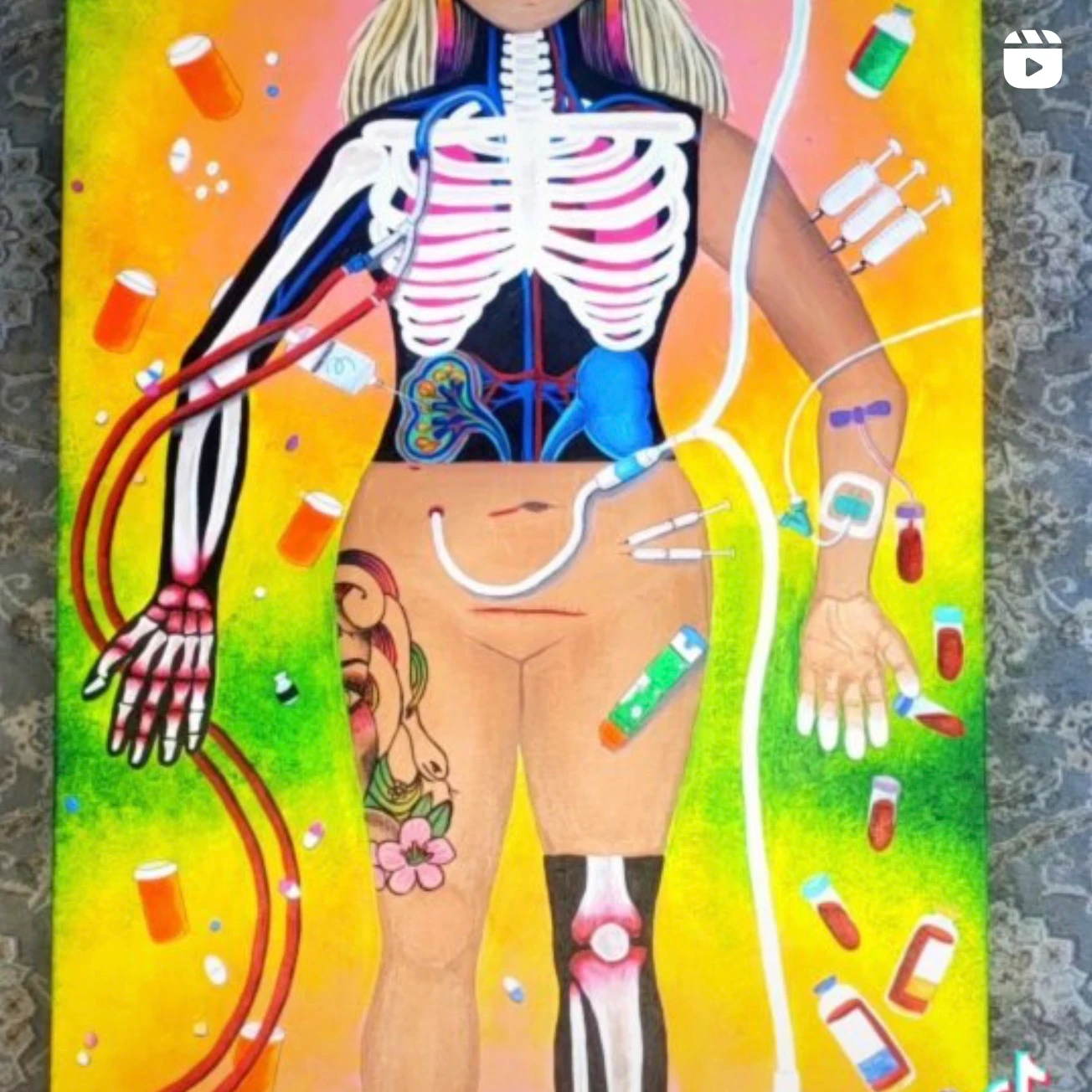
It feels like the entire world has been opened up before me, a future with managed symptoms has appeared out of the fog of an undiagnosed life, and I’m honestly still kind of in shock. Over the course of the ten years without a proper diagnosis, PNH had taken over my entire life. I had grown to expect limitless fatigue, blood transfusions, pain, and infection as my normal, all without a real explanation. I had even moved back home, unable to receive proper accommodations from my day job (partly due to the lack of official diagnosis), and barely able to take care of myself. Something was seriously wrong with me, and I felt the dream of a “stable” life being torn away by something that I couldn’t even explain or understand. I felt so isolated in my symptoms because without the scientific or social knowledge to back up my experiences, I felt increased pressure to just go along with the narrative that it was all in my head, that I was just being dramatic.

Over the course of the ten years without a proper diagnosis, PNH had taken over my entire life

This is a situation that so many of those who have suffered from undiagnosed rare diseases know far too well. But now, I am no longer alone. I have a team of doctors working with my body, not against it. I have nurses and resources and my friends at PicnicHealth, all of whom are working with me in this new life that I am living, and that feeling alone is worth all of the past ten year’s journey. I am able to listen to my body and then turn to actual clinical research to compare my experiences to others, and it is an incredibly validating path to finally be walking.


PicnicHealth’s mission is to help patients take control of their health, both with document accessibility and with their ground-breaking contributions to Rare Disease research. Fellow Rare Disease sufferers will understand the importance of continued research so that more and more of us can experience the unparalleled joy of a diagnosis. As we strive to understand our bodies and better communicate their symptoms to those around us, the work that PicnicHealth does is an amazing asset. Patients can finally compile the years of lab work, doctor visits, and clinical experiences that pile up when hunting for a diagnosis, and they can therefore be prepared to take control of the narrative and push for real answers. I hope for a world where all bodies and their symptoms are validated and cherished, and Picnic Health is helping us move towards this goal!


I hope as you read about my journey towards diagnosis, as well as my continued struggles post-diagnosis, you gain an appreciation for the ways in which patient-advocacy can change lives. The more we listen to our bodies, as well as encourage others to do the same, the closer we come to “A New Normal”.

Patients can finally compile the years of lab work, doctor visits, and clinical experiences that pile up when hunting for a diagnosis, and they can therefore be prepared to take control of the narrative and push for real answers.


A New Normal


Following a positive identification through my bone marrow biopsy, I was diagnosed with an extremely rare disease called hemophagocytic lymphohistiocytosis (HLH) on the day of my 17th birthday. Triggered by a normal teenage case of mono, my body went into hyperdrive and began producing aggressive cells that began to attack my lymphatic system. If the over-enthusiastic HLH cells were left up to their own devices, they would have continued their ceaseless attack on my organs and my spleen could have literally exploded, along with a variety of other unpleasant outcomes. I remember my mom and I joking that I looked like a bullfrog with the enlarged lymph nodes in my neck that were pressing up against my throat, while my belly stuck out at odd places, tender to the touch, incredibly swollen.


As I lay, barely conscious, the doctor explained to my parents and I that because my immune system was so riled up, I was to be given a daily dose of extra strong steroids to beat it down as much as possible while, on the flip side, I was to be administered weekly chemotherapy to kill off the remaining enemy HLH cells. There were lots of words I didn’t understand through the haze of fever, but when the doctor said “Chemotherapy”, I stiffened. I vaguely remember my mom crying next to me, my friends peering at me from the doorway of my room, and being carted, barely cognizant, from my bed to the infusion clinic to labs to back to bed.


Before this, chemotherapy had always been a plot device rather than a drug to me. I had usually seen it tossed around as a character-building hardship or a dramatic twist in medical dramas. I pictured bald, frail, old ladies in nursing homes hooked up to IVs, sickly kids in medical wards, martyred teenage girls hooked up to machines. How could this be happening to me? This question reverberated in my head as I was pumped with my first of many etoposide doses, and it continued to haunt me for quite a long time.


How could this be happening to me?

When I was an able-bodied teenager, illness was always temporary. To be honest, I would sometimes even play up the occasional sniffle in hopes of missing a day or two of school. A cold meant the chance to snuggle up in my nice cozy bed with some homemade soup and some reality TV. It meant the chance to revel in a rare break from chores, tests, soccer practice, and homework. A chance to be babied and swaddled again. Sure, getting sick was never “fun,” but it was a useful pause within the action of my life. Inevitably, I would always look forward to returning to the world of the living within a few days or so, refreshed and healthy. Maybe with an angry teacher and a pile of homework waiting in the coming school week, but worth it every once in a while.


There was always this vision of an inevitable path forward. I had no reason to think otherwise: a cold or the flu would always plateau and then my strength would inevitably fight back. Whenever things did seem to take too long, when the gloating over missing school turned to moaning and groaning, my parents would admonish me: “Stop whining! You’ll be better soon!” and it eventually would always ring true. People that live relatively able bodied lives continue to understand health in this way: as always returning to an inevitable equilibrium of wellness. With enough rest, or a run, or some Tylenol, or some water, a turmeric supplement, whatever, many people will bounce back, better than ever.


For those people, and the system that they have built, health is the norm that our schedules revolve around. Illness is an annoying pause in productivity that must occasionally be dealt with; there is always a healthy future to recover towards. Because health is the productive norm, disabilities and illnesses are oddities to be pushed out of sight, instead of accommodated. Within a world where a traditional model of health is assumed, disabled stories are used as tall tales to encourage “healthy lifestyles:” bodies are reliable machines that need to be tuned up every now and then and those that are sick are simply too lazy to bounce back (and thus deserve the extreme higher rates of poverty, comorbidities, and death that we categorically face). We see the narrative of linear recovery everywhere: from sitcom plots to healthcare to how we request leave at our jobs- the expectation is always that if you push through, ignore your body and just “get over it” things will get better.


Within a world where a traditional model of health is assumed, disabled stories are used as tall tales to encourage ‘healthy lifestyles’...I believe that not all descriptions of health should be the same.

So, with that narrative firmly ingrained in my mind, I had no frame of reference for the lifelong journey that I was stumbling into. I played soccer five nights a week, ran a seven minute mile, and rarely got sick besides the occasional flu. I couldn’t imagine a world where sucking it up and going on a run wasn’t the solution to illness. That is, until I began to get winded easily the summer before my senior year of high school, and my young healthy body began to experience strange new symptoms. I collapsed onto the pavement while my friends were shooting off fireworks on the Fourth of July. At the beach, the summer sun burned my eyes. I slept and slept and never felt rested. My dad encouraged me to drink more water. My mom pushed me to exercise, telling me that I just had a case of the teenage lazies. The reliable machine that was my body began to malfunction, and all of our troubleshooting was leading nowhere. I ignored it for a couple of weeks, waiting and waiting for things to get better as always.


Near my birthday, when I fainted in the shower, I thought of it more as a funny story than as a portend to an entirely new life. Finally, with this last occurrence, my nurse mom kidnapped me and drove me to the hospital, unable to write off any more symptoms (thanks, Mom!). I was admitted almost immediately for extremely low levels of hemoglobin, extremely high levels of inflammation, and a disastrous and continuous 103 fever. Even so, during all of this, I remember joking around with my friends about missing homecoming, about having to reschedule my birthday party, about getting “out of shape.” I remember worrying about how my port scar would look in senior pictures. Looking back, these things seem so inconsequential in light of the seismic shift that was occurring, but they were the tethers to normal that I clung to. I expected everything to simply resume, as I had always been told it would. I was suddenly Frodo, leaving my little hobbit home, second breakfast in hand, with no concept of the trials to come.


As I sat in the oncology unit of the hospital, waiting for the results of a rushed bone marrow biopsy, my family sitting grimly around me, I feebly began to acknowledge that my one-off episode was turning into a season-long arc. The doctors reassured me that with chemotherapy and steroids, my fatigue would come to an end and I would triumphantly return to my friends at school, good as new. As much as I can look back and appreciate my doctors for their optimism, I wish that I could have had a wise old Gandalf-type wizard to snap me out of sitcom fantasies and tell me to brace myself for an entirely new life: dragons, orcs, and all. It would take months, even years, but eventually I would begin to understand that my adventure has forever altered the path of my life.


I am writing this article on Rare Disease Day because I believe that not all descriptions of health should be the same: I will struggle and claw to live for the rest of my life, and so will so many amazing and talented disabled people, and we deserve to have representation and accommodation for lives outside of the traditional narrative. On Rare Disease day, I hope we all can look at health not as an inevitability but as a beautiful (and sometimes grueling) individual journey that we each must embrace and support each other in, especially those whose journeys are more challenging than our own. If we expand our definition of personal health to include those with disabilities, when we inevitably face our own dragons we will each have the social networks of support and understanding that we will need.


Read on for Part 2 of Maegan’s PNH Journey “The Fight Continues” as she lifts up her story and supports others on Rare Disease Day 2022.


To continue to support Maegan, follow her on Instagram (@bu99ram) and LinkedIn.

We know that every person's story is unique and deserves to be heard.

Join our early breast cancer registry to be counted and share your story with research.

Learn More

Create a List

List the names of all the doctors, hospitals, and other facilities your loved one visits regularly, along with those they have visited in the past. Try to go back as far as you can, striving for at least the last 5-10 years, but do your best. Even if you can’t remember them all, having a strong baseline can help you quickly identify gaps in records.

Ensure You Have the Appropriate Legal Status

It is important to make sure that you are fully empowered to make decisions on behalf of your loved one with Alzheimer’s. Your relationship status with the patient may not be enough to legally give you access to your loved one's medical information. It is a good idea to talk to an expert about securing special legal status, such as Power of Attorney (POA), a legal document that allows an individual to name someone as their decision maker should they no longer be able to make decisions on their own.
Gather and Organize the Medical Records in One Place

It’s important to have all of your loved one’s medical records together in one spot. This makes it much easier for you and your loved one’s physicians to accurately map the patient’s medical journey and more easily share information between doctors. Fortunately, tools exist to make record management and access simple. A free resource like PicnicHealth helps you collect and organize all of this information. PicnicHealth’s intuitive timeline allows you to pinpoint data across the medical history, eliminating your need for keeping heavy binders filled with paper records or keeping track of multiple software portal logins.

Review the Medical Records to be an Informed Advocate

The better you understand your loved one's medical history, the better you can advocate on their behalf. Access and understanding of this information will help you to ask informed questions with physicians. Through regular communication backed by the data in the medical records, you can help your loved one’s care team develop a more successful care plan.

Learn more about PicnicHealth’s commitment to the Alzheimer’s community and the Alzheimer’s Association

Learn More

Together, we can make a difference.

Learn more about PicnicHealth’s commitment to the Alzheimer’s community and the Alzheimer’s Association

Learn More

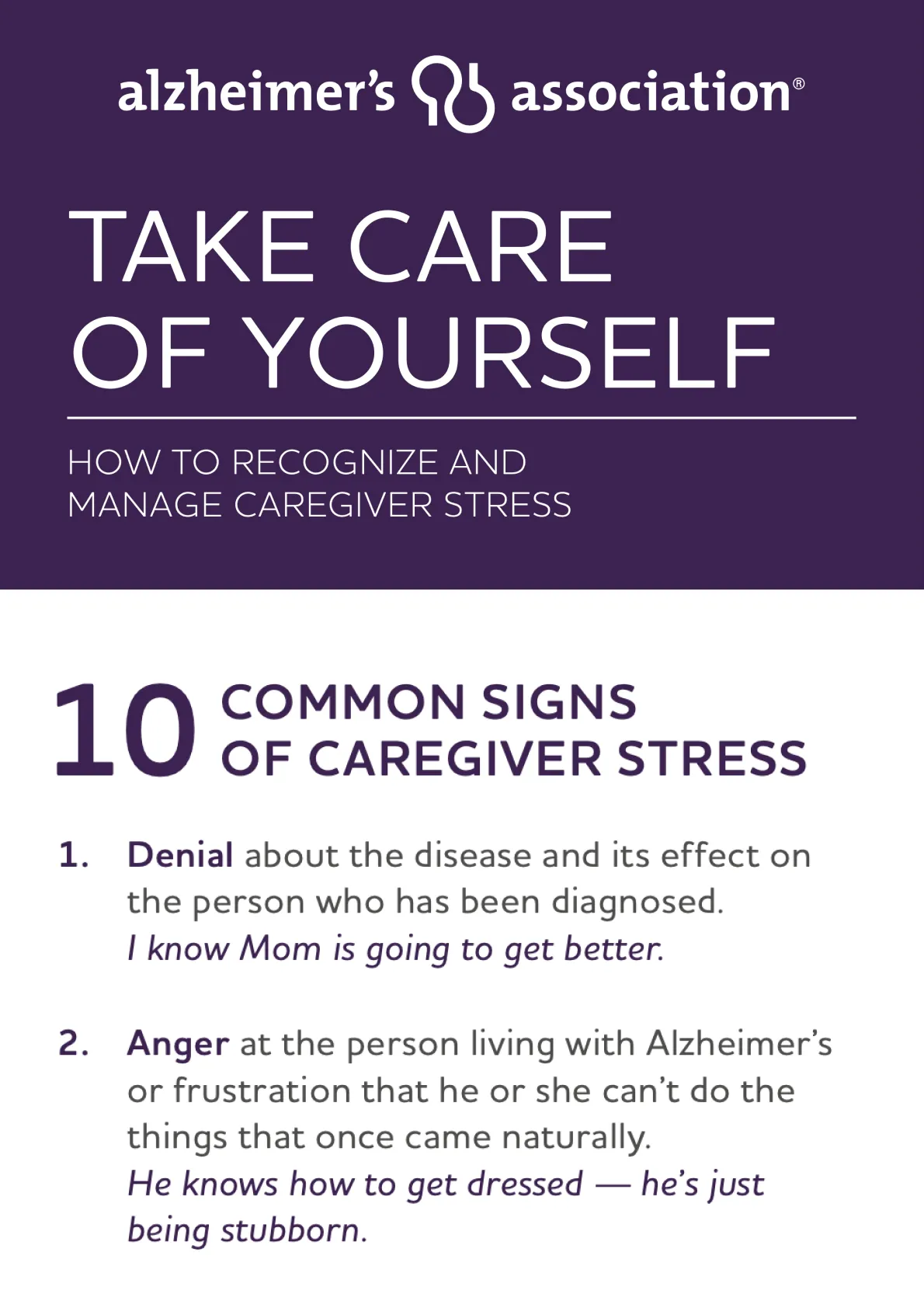
1. Build a support network.

When you’re juggling appointment times and insurance claims, putting a robust support system together might not strike you as the most urgent task. Investing the time to cultivate relationships with people can turn to in times of need will pay dividends. The next time you need a last-minute ride or just someone to listen, you won’t be on your own.

There are many condition-specific support groups and support groups for caregivers generally in person or online. In addition to the encouragement and empathy they provide, support groups can be a helpful source of tips, resources, and recommendations for navigating caregiving.

2. Stay organized.

The backbone of effective caregiving is organization. Keep medical information, appointment schedules, and medication lists in order. Use a planner or a digital service like PicnicHealth to stay on top of your responsibilities. This attention to detail can prevent future complications and reduce day-to-day stress.

3. Explore treatments and clinical trials.

We’ve seen incredible breakthroughs in treatment over the past couple of years, powered by patients and their caregivers participating in research. Stay in the loop about the latest in medical advancements and available resources that could benefit your loved one. Whether it’s a new therapy option or a community service that aids independence, being informed can make a world of difference in the quality of care you provide.

4. Make time for self-care.

It may seem self-centered to focus on self-care—but when you feel good, you can be a better caregiver. Whether it’s exercise, a mindfulness practice, a soak in the bath, or just time to rest when you need it, carve out those moments in the day when you can unwind, reset, and stay healthy mentally and physically. Think of it as building up your reserves of kindness, patience, and understanding—which can only benefit your loved one. No one can pour from an empty cup.

Having trouble managing your loved one's medical records?

Easily manage all of your loved one's medical records and contribute to ongoing Alzheimer's research with PicnicHealth.

Learn More

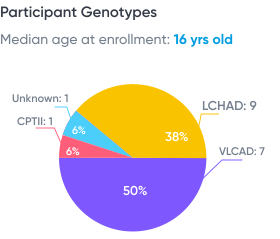
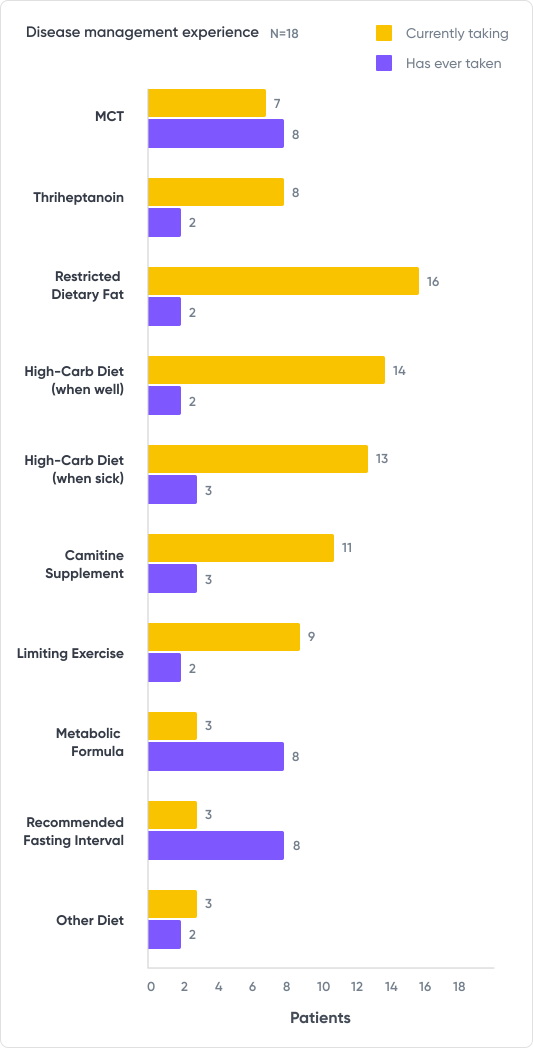
LC-FAOD Odyssey: A Preliminary Analysis, presented at INFORM 2021

Data from real-world medical records:

(from 13 patients with LC-FAOD)

16 yrs old

Median age at enrollment

38% Female

15 providers / patient

7.5 years of data / patient

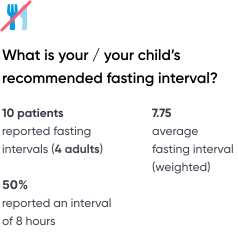
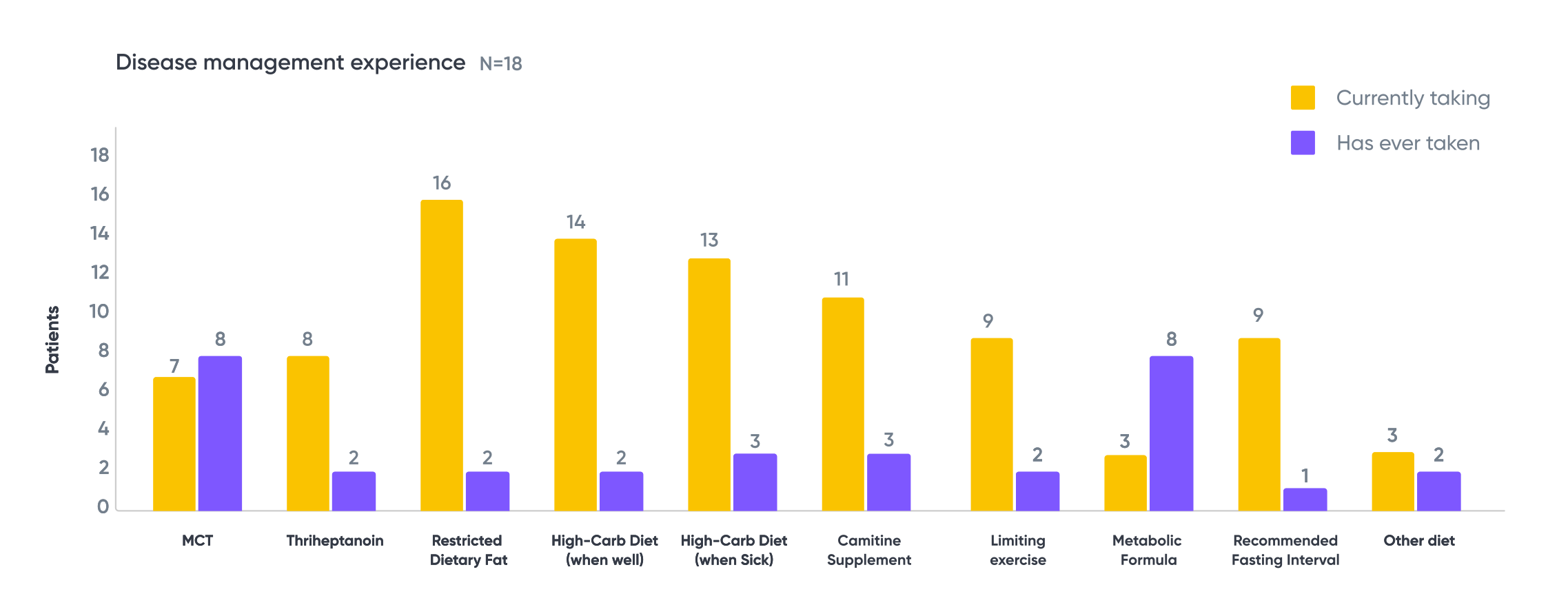
Data from patient-reported outcome (PRO) survey

(from 13 patients with LC-FAOD)

We hope you found this session informative! Sign up for PicnicHealth’s Alzheimer’s research program below.

Join Now
Tip: Download or print the poster at the end of this article to review before your next appointment!
However, it's important to consult with a healthcare provider or registered dietitian to determine the appropriate amount of protein for your individual needs. In general, a diet with moderate protein intake (about 0.8 grams per kilogram of body weight per day) is recommended for people with kidney diseases.

Learn more about contributing to IgAN research with PicnicHealth. 

Learn More

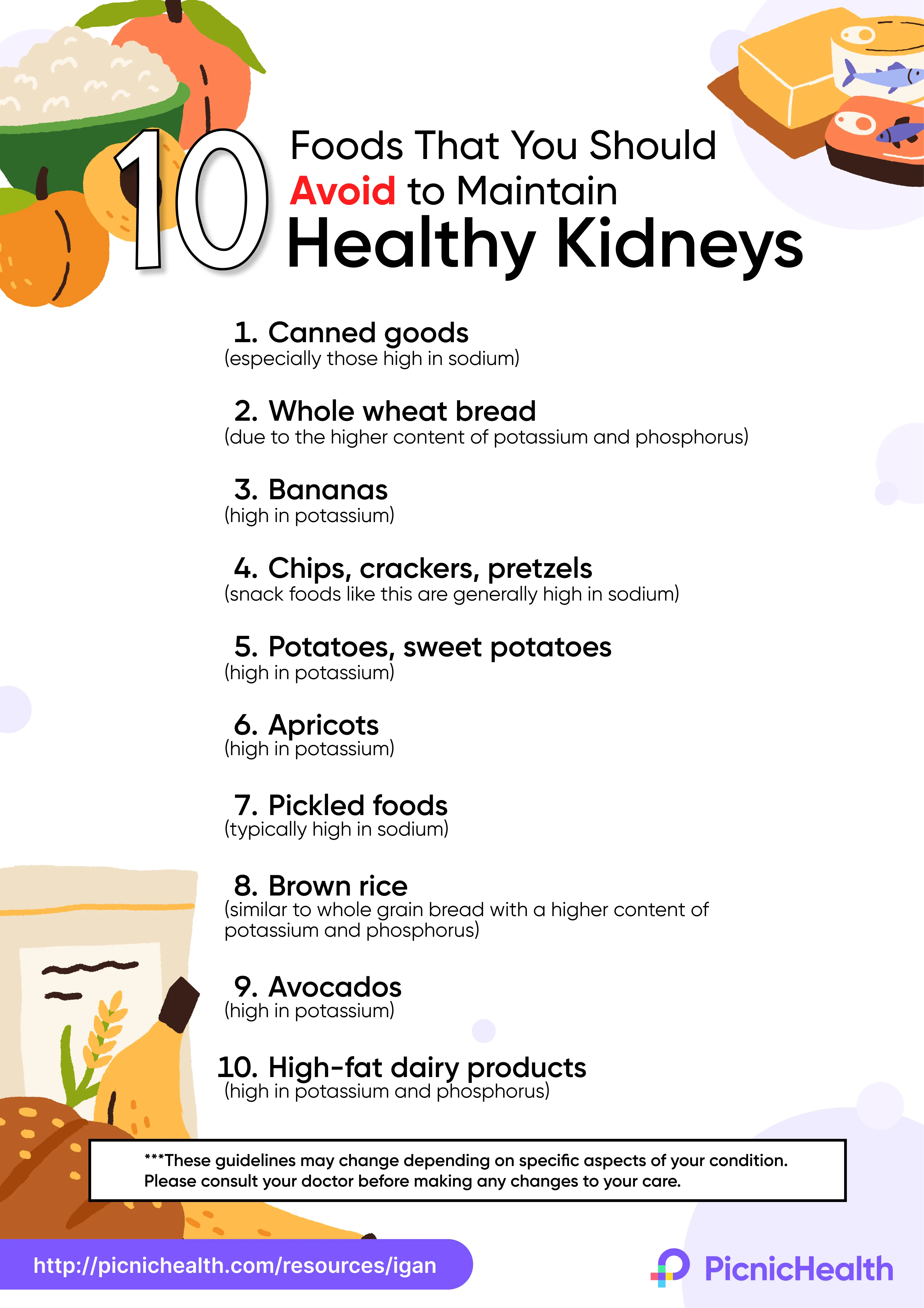
Save The Top-10 List

Download this list to save onto your phone or print it out for your fridge!

Download PDF

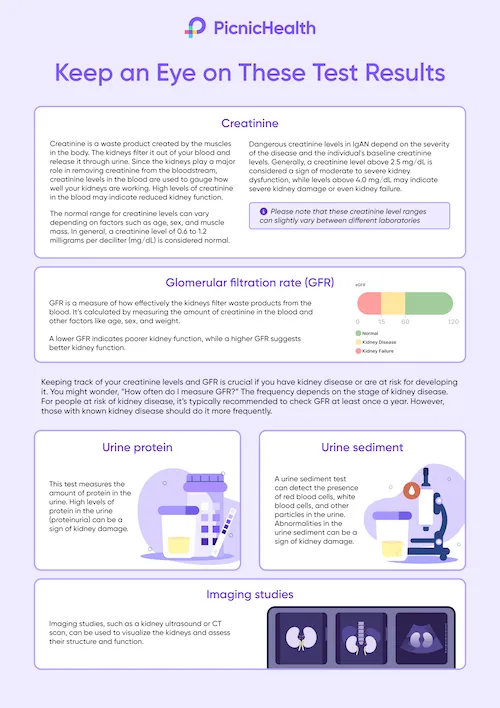
Keep an Eye on These Test Results

Download this poster to save onto your phone or print it out for your fridge!

Download PDF

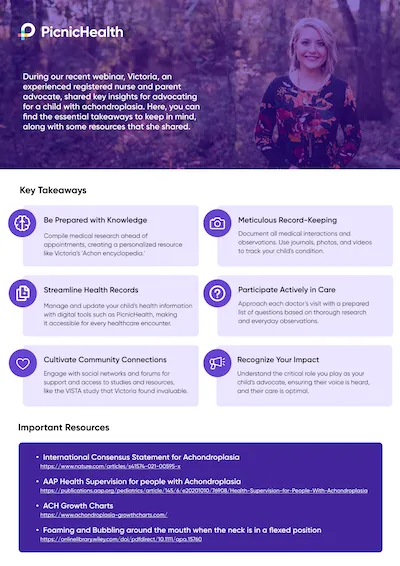
Resource Flyer

Explore the essential takeaways from Victoria's Webinar, along with some resources that she shared.

Download PDF

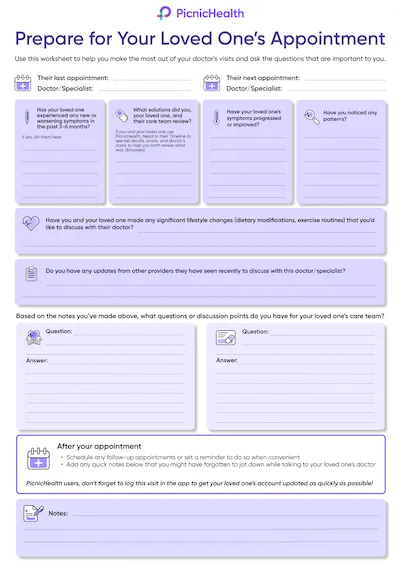
Pre-Appointment Worksheet

Prepare for your loved one's next appointment

Download PDF
A tablet, phone, or laptop with a working camera, microphone, and stable internet connection.
A quiet, distraction-free area with enough space to walk a few steps if applicable.
A chair that you can use during any movements or tasks you’ll be asked to perform.
The tripod mailed to you via Amazon.

What to Expect

Before your video call:

Book Your Assessment
Visit your to-do list on your PicnicHealth Research Dashboard or click the scheduling link sent to your email. Note: Search for “New task for the ORBIT-CIDP Study" to find the video call scheduling link.
Receive Confirmation
Check your email for a confirmation with your scheduled video call time and instructions.

On the day of your video call:

Click on Video Link
Join your personal video call using the link we sent by email, or text message, or find it on your research dashboard.
Meet your nurse
A Registered Nurse (RN) will guide your virtual assessment, which will last about 30 minutes.
Complete the Physical Activity Assessment (INCAT)
The nurse will guide you through questions and, if needed, physical tasks to help researchers gain a deeper understanding of CIDP.
Complete the Movement Assessment (Optional)
If you participate, a nurse will guide you through three short recorded movement activities to complete as best you can:
Chair Task
While seated with your arms crossed over your chest and hands on oppositeshoulders, you’ll be asked to stand up, remain standing for 20 seconds, and then sit back down.
Arm Movement Task
While seated with your arms resting at your sides, you’ll be asked to raise both arms out to the sides until they meet above your head, then lower them back to your lap.
Finger Dexterity Task
While seated, raise your right hand with fingers extended. Touch your thumb to each fingertip in order, then reverse. Repeat with your left hand. This will then be repeated with your left hand.
Earn Compensation

Receive up to $55 for your participation:

  • $25 for completing the Physical Activity Assessment (INCAT).
  • $30 for the Optional Movement Assessment.
Recording: Your research assessment may be recorded to ensure accurate data collection. If you participate in the optional Movement Assessment, it will also be recorded. These recordings may capture your voice and responses, but identifiable information like your face, name, or background will be removed to protect your privacy.
Opt Into the Smart Insole Study Activity
Complete the opt-in survey to confirm your participation.
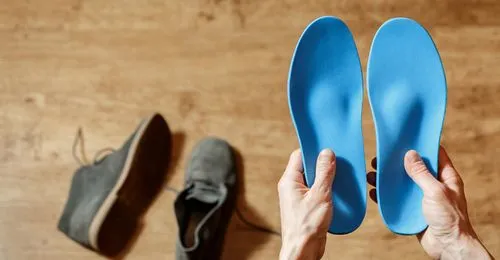
Receive Your Smart Insoles
Your smart insoles will be shipped to your home via FedEx and should arrive within 1 week.
Create Your Account

You’ll receive an email from Celestra Health with your account details. Follow those steps to set up your account.

  • If you don’t see an email from Celestra Health in your inbox, please check your spam or junk folder.
Download the App
After creating your account, you’ll be directed to a landing page with links to the App Store or Google Play. Use the link to download the correct version of the app for your device.
For illustrative purposes only, your insoles may look different
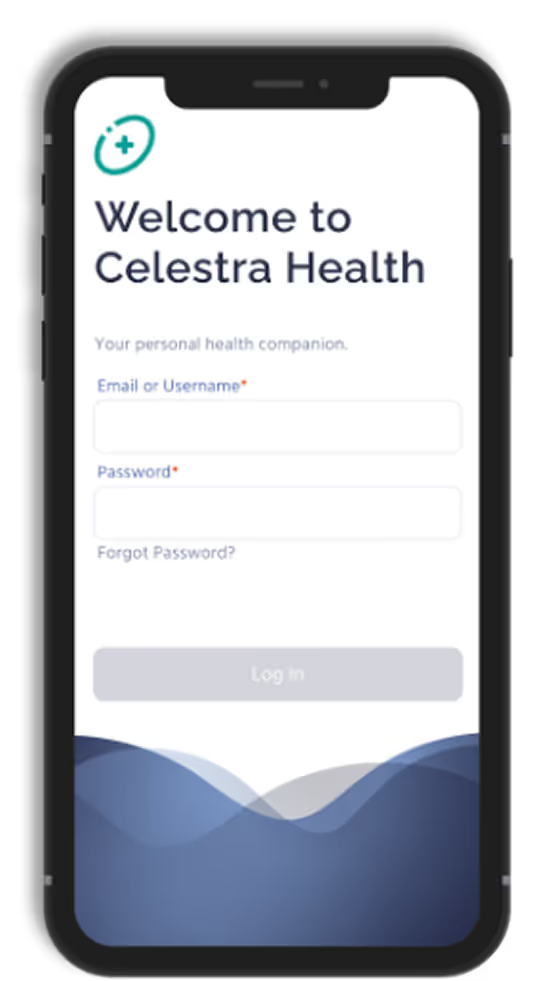
Log In
Open the app and log in using the email address and password you used when creating your account.
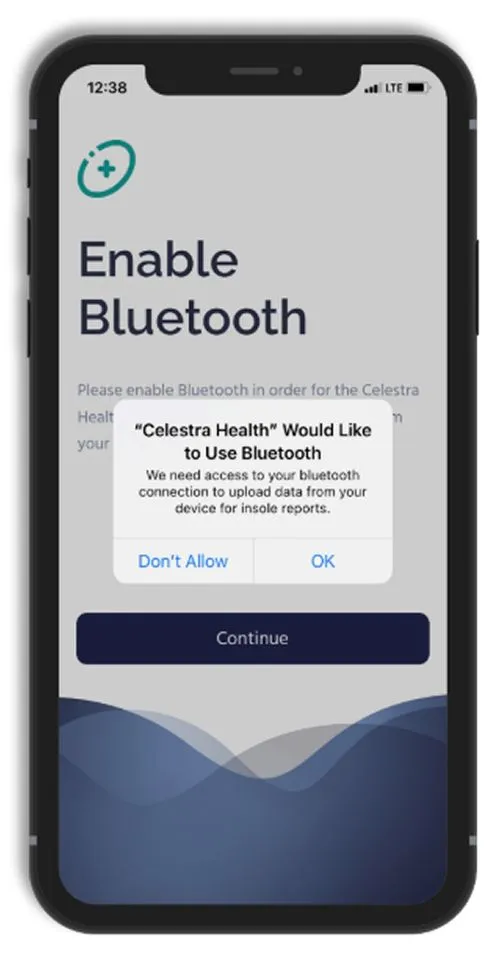
Enable Permissions
  • For iOS users: Enable Motion & Fitness and allow access to Apple Health.
  • For Android users: Enable Activity Recognition permissions.
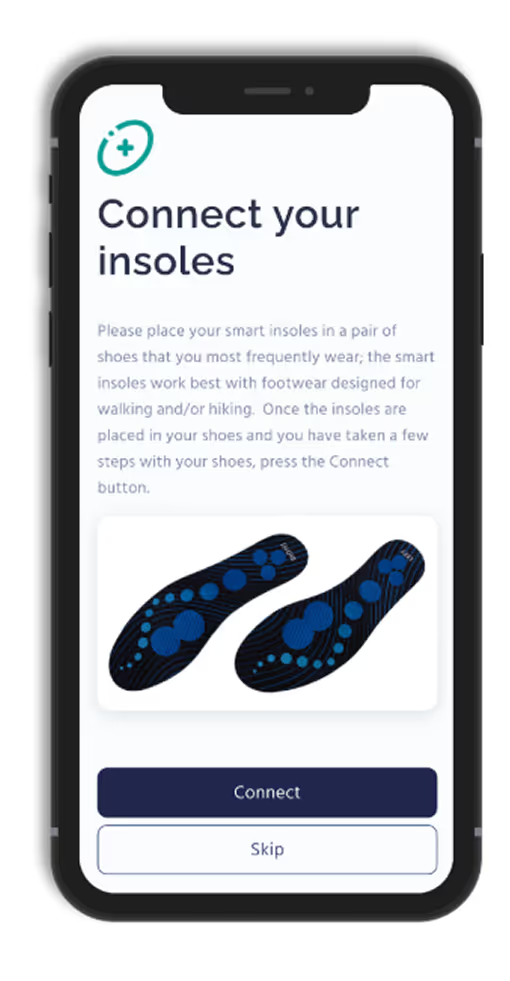
Connect Your Insoles
Turn on Bluetooth, and follow the app's instructions to connect your smart insoles.
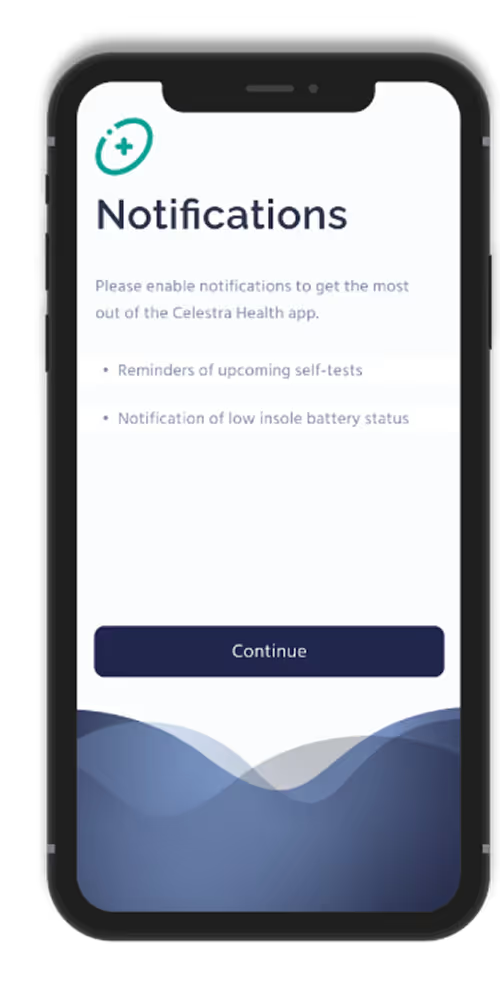
Enable Notifications
Enable push notifications to stay updated on reminders and activity progress.
For illustrative purposes only, your insoles may look different
Start Walking Sessions
When you’re ready to perform a walking session, tap ‘Start’ on the Ad Hoc Walking task card in the app.
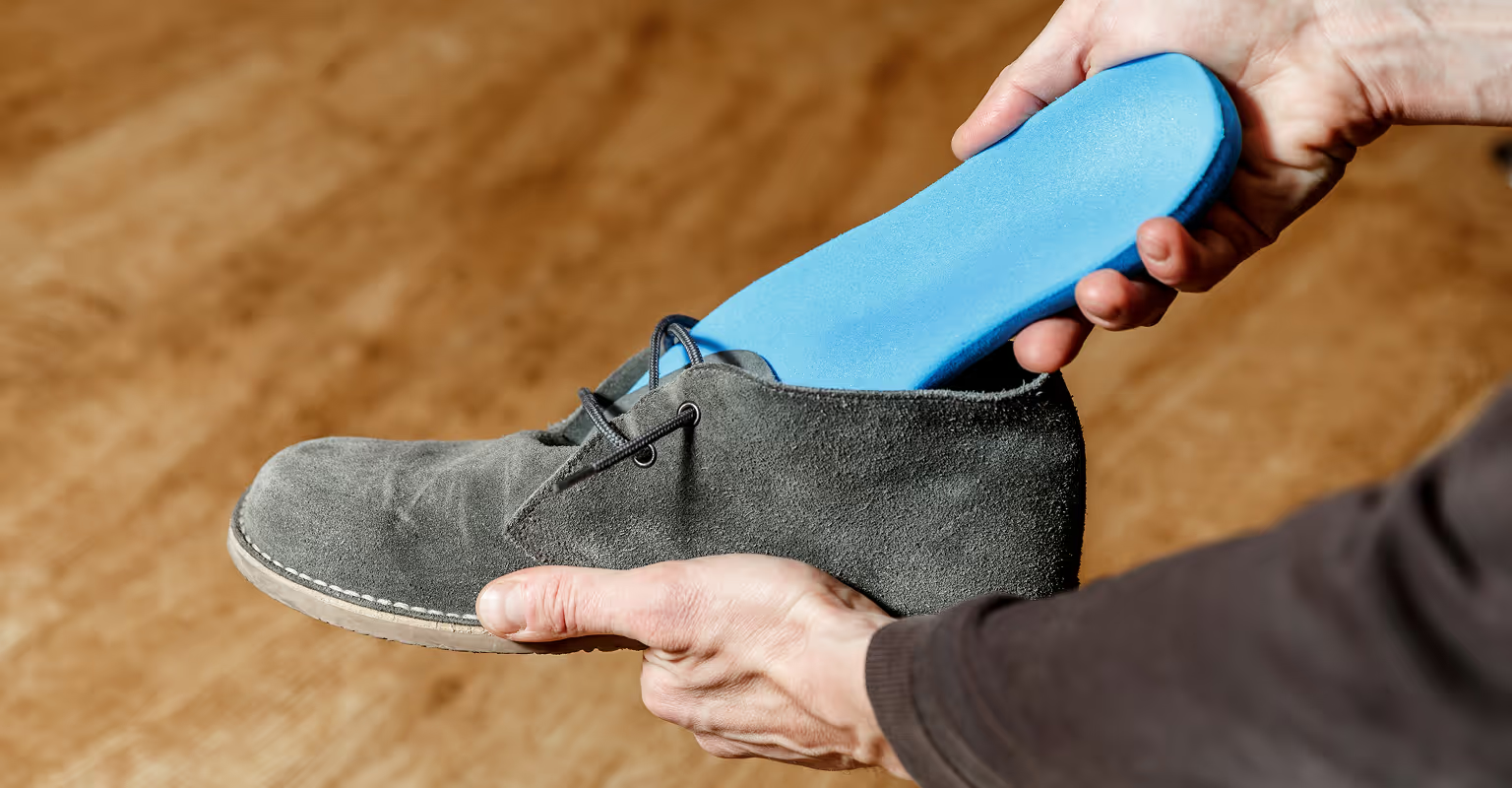
Smart insoles are designed to fit comfortably into any pair of closed shoes
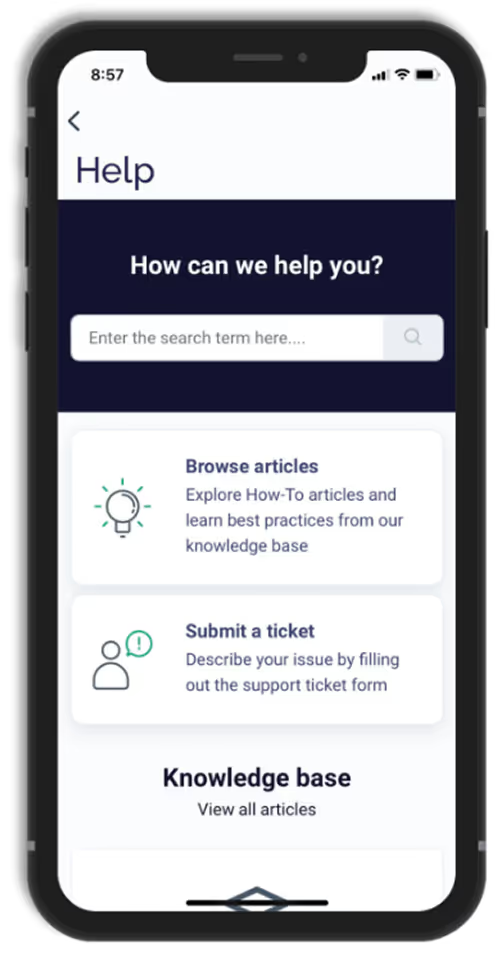
Need Help?
Should you need to contact Celestra Health support for any reason, you can submit a ticket through the Help section of the app by tapping the Submit A Ticket card and filling out the form. A Celestra Health representative will typically respond within one business day.
A fully charged device (smartphone, tablet, or laptop) with a working camera, microphone, and stable internet connection.
A quiet, well-lit space that is free from distractions.
Good lighting so your face is clearly visible; having a small flashlight or your phone’s flashlight nearby can help with skin, scalp, or joint checks.
Flexible device positioning so you can easily adjust or prop up your device hands-free if the research staff asks to view specific areas (such as your face, hands, or scalp).
Space to move in case you are briefly asked to stand or walk a few steps.
Your medication information, including your current steroid(s) and BENLYSTA® (belimumab) — either the medication bottles or a list with doses and schedule.
Time to focus without interruptions so the visit can be completed comfortably.
Before Your Video Call:
Schedule your visit
Use the scheduling link on your PicnicHealth Research Dashboard or the link sent to your email.
Tip: Search your inbox for “New task for the BEACON-SLE Study - schedule your remote visit” to find the scheduling email.
Check your confirmation
You’ll receive an email with your appointment time and instructions for joining the video call.
On the Day of Your Video Call:
Join the call
Click the Zoom link sent to you by email or text message, or use the link available on your research dashboard.
Meet with the research staff member
  • They will ask you structured questions about your health and any lupus symptoms you’ve experienced over the past 30 days.
  • If needed, they may guide you through a few simple visual checks (such as looking at your skin, hair, joints, or mouth). You can always tell them if you’re not comfortable with anything.
Receive Compensation
You’ll receive up to $60 for completing your visit.
See More

Related Articles

View All

Take control of your care.

Understand your health clearly. Walk into every appointment prepared.