Resources
Disease Management

The Future of Sickle Cell Care

By 
Wunmi Bakare

Sep 23, 2022 • 6 min read

Blog post originally written by the AllStripes community team. AllStripes was acquired by PicnicHealth in 2023.

September is Sickle Cell Awareness Month — 30 days of raising awareness for a health condition that affects 6.4 million people globally. As a patient advocate, I believe that it is time to recognize the perseverance of people living with sickle cell disease (SCD) and commit to working with partners in the government, non-profit, and private sectors to improve the healthcare outcomes for individuals faced with this debilitating, chronic illness. 

To commemorate National Sickle Cell Awareness Month, President Biden put out a formal press statement informing patients that medical scientists across the nation are working hard to put an end to SCD. Presently, the Food and Drug Administration (FDA) has approved new drug therapies to help patients manage pain while the National Institutes of Health (NIH), through its Cure Sickle Cell Initiative, is developing safe and effective genetic therapies. This annual observance was appointed by Congress to help focus attention on the need for research and treatment of sickle cell disease. 

Sickle Cell Disease: The Family Burden 

According to the American Society of Hematology (ASH), 100,000 million people have sickle cell trait worldwide; with the sickle gene primarily affecting people of African descent. With migration patterns changing the SCD landscape, the disease now affects people with Middle Eastern, Mediterranean, Caucasian, Indian, Hispanic, Native American, and other ancestries. 

In sickle cell anemia, blood is chronically low in oxygen and this causes red blood cells to contort into crescent-shaped cells that die early. The process leaves a shortage of healthy red blood cells and triggers disruptions in blood flow to major organs like the brain, liver, heart, and kidneys. People with sickle cell begin experiencing symptoms in early childhood and have to deal with serious health complications like infection, stroke, and chronic pain as they age into adulthood. Sickle cell anemia is a lifelong illness that causes severe damage to the body, critically impacting the patient’s quality of life. 

In a multinational survey conducted by Global Blood Therapeutics (GBT), the long-term effects of SCD is a primary concern among patients and providers; with caregivers reporting profound physical, psychosocial, and economic burdens when caring for loved ones with the disease. If the ill child's presence changes the interpersonal relationships within the family unit, the family dynamic is affected. However, if informed caregivers have social support systems available to them, they may be able to cope more favorably with the illness. 

Untold Truths 

SCD affects the U.S. population unevenly, with black and brown communities disproportionately affected. Structural racism in healthcare and constant systemic inequities means patients with sickle cell are often the last to get help. The disparities in care stem from poor access to SCD treatment centers and gaps in funding support for SCD as well as the implementation of medical advances. 

In healthcare settings, ‘opioidphobia’ amongst prescribers means pain medications are denied even when required for sickle pain. This is because some providers think that a reliance on opioid analgesics is synonymous with drug abuse and addiction. Over the last decade, these negative and stigmatizing connotations have been unfairly applied to patients with SCD in a case of “guilty by association.” 

At the emergency room, patients with SCD wait longer to receive care and are typically treated by generalists, who know very little about the disease and don’t understand the patients’ desperate need for pain relief. Many non-specialist providers lack the proper training to provide good comprehensive care to patients so they are subjected to acute physical pain, emotional trauma, discrimination, and health-related stigmatization in places of care. 

A Call to Action 

Sickle Cell Awareness Month is a wake-up call for elected officials, policymakers, government agencies, and pharmaceutical companies to invest in sickle cell education, research, and treatment. With increased awareness, the actions that follow will encourage better dialogue and improved conversations around the management and care of patients. 

I believe that advocates are quintessential parts of the ecosystem for change because they inform lawmakers and health leaders of outdated policies and healthcare priorities. As a thought-leader in the sickle cell community, I try to foster mutually-beneficial relationships with community-based groups and non-profit organizations in the advocacy space to encourage cross-collaboration and allied partnership. 

As long as the end goal is to publicly raise awareness for sickle cell, in ways that inform social or political change, there is always room for joint partnership. When we use the phrase “representation matters” it is not limited to race, religion, or sexual orientation; it also applies to the rare disease and disabled community. Diverse voices and perspectives have the power to transform prejudice into empathy and make the invisible visible, which is what we need. 

My hope is that by using perceptive awareness campaigns that highlight the patient experience, we can encourage the healthcare industry to see patients as people first and lean toward compassionate and respectful care. Given the complexity of sickle cell disease, patients and their families need optimal support, understanding, and care from the healthcare community. 

The Future of Sickle Cell Care 

Presently, stem cell or bone marrow transplant is the only known cure for sickle cell disease, but this is only possible for a limited number of affected individuals who have suitable donors. As a transplant survivor, I have benefitted from a curative therapy (i.e. hematopoietic stem cell transplantation) but sadly, this advanced treatment option is not a universal cure that is available to patients in North America and beyond. 

In 2019, Global Blood Therapeutics (GBT) announced the approval of Oxbryta (voxelotor), a disease-modifying prescription medication that stops hemoglobin from sickling in adults and children over the age of 12. Oxbryta is an oral therapy taken once daily that directly inhibits sickle hemoglobin polymerization, which is the root cause of SCD. 

Dr. Kim Smith-Whitley is the Executive Vice President and Head of Research and Development for GBT and a renowned hematologist. When asked about the future of sickle cell care she said, “GBT is supporting an initiative that's focused on bringing centers of excellence to the sickle cell community by creating a network of healthcare facilities that patients can visit to get high quality care. If a patient lives in a rural area, we are able to direct them to a center close by. Introducing this hub and spoke model helps the healthcare system to better identify and address barriers to quality care.” 

Whitley and GBT are focused on developing more disease-modifying therapies to ensure that patients have multiple treatment options. “My hope is that children born with sickle cell disease never have to experience the symptoms of SCD because there are new therapies available from birth” she added. 

Researchers at the National Human Genome Research Institute (NHGRI) at the NIH are attempting to cure sickle cell disease by correcting the defective gene and inserting it into the bone marrow of a sickle patient to stimulate production of normal hemoglobin. Last month, I spoke with acting Deputy Director and Senior Investigator for the NHGRI, Vence Bonham Jr J.D. about the progress made in sickle cell research, particularly with gene therapy. 

“For so long, there was only one treatment for SCD which was hydroxyurea and now there are a number of new treatments in the pipeline. I'm very excited about what's happening with gene therapy, especially when it comes to creating a potential modification in people's genomes that's safe. In the next five to ten years, sickle cell will not look like it did in 1990 or even 2010.” Bonham’s goal is to ensure that the lifespan of individuals continues to grow and more treatment options become available to help patients better manage their disease symptoms. 

We as a society need to become better educated about sickle cell disease and have compassion for individuals living with the condition. With deeper knowledge of the disease opening new avenues of innovation, there are exciting new treatment options underway. As more and more stakeholders invest in sickle cell research, the future is incredibly bright for patients and caregivers.

Wunmi Bakare is the Founder of WBPR Agency and the creator of #SickleCellProdigy.

We know that every person's story is unique and deserves to be heard.

Join our early breast cancer registry to be counted and share your story with research.

Learn More

Create a List

List the names of all the doctors, hospitals, and other facilities your loved one visits regularly, along with those they have visited in the past. Try to go back as far as you can, striving for at least the last 5-10 years, but do your best. Even if you can’t remember them all, having a strong baseline can help you quickly identify gaps in records.

Ensure You Have the Appropriate Legal Status

It is important to make sure that you are fully empowered to make decisions on behalf of your loved one with Alzheimer’s. Your relationship status with the patient may not be enough to legally give you access to your loved one's medical information. It is a good idea to talk to an expert about securing special legal status, such as Power of Attorney (POA), a legal document that allows an individual to name someone as their decision maker should they no longer be able to make decisions on their own.

Gather and Organize the Medical Records in One Place

It’s important to have all of your loved one’s medical records together in one spot. This makes it much easier for you and your loved one’s physicians to accurately map the patient’s medical journey and more easily share information between doctors. Fortunately, tools exist to make record management and access simple. A free resource like PicnicHealth helps you collect and organize all of this information. PicnicHealth’s intuitive timeline allows you to pinpoint data across the medical history, eliminating your need for keeping heavy binders filled with paper records or keeping track of multiple software portal logins.

Review the Medical Records to be an Informed Advocate

The better you understand your loved one's medical history, the better you can advocate on their behalf. Access and understanding of this information will help you to ask informed questions with physicians. Through regular communication backed by the data in the medical records, you can help your loved one’s care team develop a more successful care plan.

Learn more about PicnicHealth’s commitment to the Alzheimer’s community and the Alzheimer’s Association

Learn More

Together, we can make a difference.

Learn more about PicnicHealth’s commitment to the Alzheimer’s community and the Alzheimer’s Association

Learn More

1. Build a support network.

When you’re juggling appointment times and insurance claims, putting a robust support system together might not strike you as the most urgent task. Investing the time to cultivate relationships with people can turn to in times of need will pay dividends. The next time you need a last-minute ride or just someone to listen, you won’t be on your own.

There are many condition-specific support groups and support groups for caregivers generally in person or online. In addition to the encouragement and empathy they provide, support groups can be a helpful source of tips, resources, and recommendations for navigating caregiving.

2. Stay organized.

The backbone of effective caregiving is organization. Keep medical information, appointment schedules, and medication lists in order. Use a planner or a digital service like PicnicHealth to stay on top of your responsibilities. This attention to detail can prevent future complications and reduce day-to-day stress.

3. Explore treatments and clinical trials.

We’ve seen incredible breakthroughs in treatment over the past couple of years, powered by patients and their caregivers participating in research. Stay in the loop about the latest in medical advancements and available resources that could benefit your loved one. Whether it’s a new therapy option or a community service that aids independence, being informed can make a world of difference in the quality of care you provide.

4. Make time for self-care.

It may seem self-centered to focus on self-care—but when you feel good, you can be a better caregiver. Whether it’s exercise, a mindfulness practice, a soak in the bath, or just time to rest when you need it, carve out those moments in the day when you can unwind, reset, and stay healthy mentally and physically. Think of it as building up your reserves of kindness, patience, and understanding—which can only benefit your loved one. No one can pour from an empty cup.

Having trouble managing your loved one's medical records?

Easily manage all of your loved one's medical records and contribute to ongoing Alzheimer's research with PicnicHealth.

Learn More

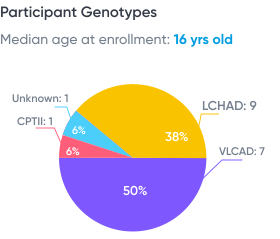
LC-FAOD Odyssey: A Preliminary Analysis, presented at INFORM 2021

Data from real-world medical records:

(from 13 patients with LC-FAOD)

16 yrs old

Median age at enrollment

38% Female

15 providers / patient

7.5 years of data / patient

Data from patient-reported outcome (PRO) survey

(from 13 patients with LC-FAOD)

We hope you found this session informative! Sign up for PicnicHealth’s Alzheimer’s research program below.

Join Now
Tip: Download or print the poster at the end of this article to review before your next appointment!
However, it's important to consult with a healthcare provider or registered dietitian to determine the appropriate amount of protein for your individual needs. In general, a diet with moderate protein intake (about 0.8 grams per kilogram of body weight per day) is recommended for people with kidney diseases.

Learn more about contributing to IgAN research with PicnicHealth. 

Learn More

Save The Top-10 List

Download this list to save onto your phone or print it out for your fridge!

Download PDF

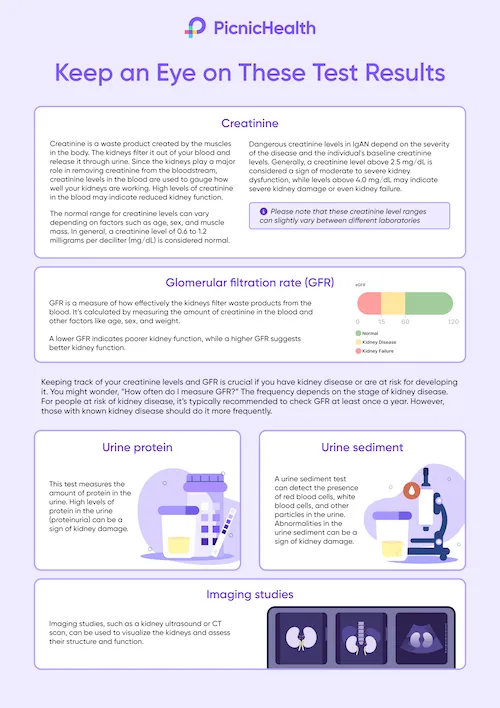
Keep an Eye on These Test Results

Download this poster to save onto your phone or print it out for your fridge!

Download PDF

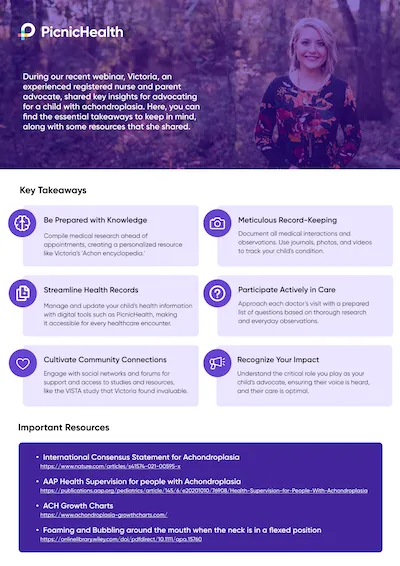
Resource Flyer

Explore the essential takeaways from Victoria's Webinar, along with some resources that she shared.

Download PDF

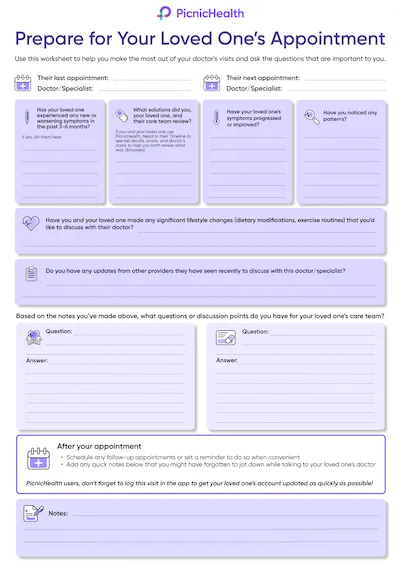
Pre-Appointment Worksheet

Prepare for your loved one's next appointment

Download PDF
A tablet, phone, or laptop with a working camera, microphone, and stable internet connection.
A quiet, distraction-free area with enough space to walk a few steps if applicable.
A chair that you can use during any movements or tasks you’ll be asked to perform.
The tripod mailed to you via Amazon.

What to Expect

Before your video call:

Book Your Assessment
Visit your to-do list on your PicnicHealth Research Dashboard or click the scheduling link sent to your email. Note: Search for “New task for the ORBIT-CIDP Study" to find the video call scheduling link.
Receive Confirmation
Check your email for a confirmation with your scheduled video call time and instructions.

On the day of your video call:

Click on Video Link
Join your personal video call using the link we sent by email, or text message, or find it on your research dashboard.
Meet your nurse
A Registered Nurse (RN) will guide your virtual assessment, which will last about 30 minutes.
Complete the Physical Activity Assessment (INCAT)
The nurse will guide you through questions and, if needed, physical tasks to help researchers gain a deeper understanding of CIDP.
Complete the Movement Assessment (Optional)
If you participate, a nurse will guide you through three short recorded movement activities to complete as best you can:
Chair Task
While seated with your arms crossed over your chest and hands on oppositeshoulders, you’ll be asked to stand up, remain standing for 20 seconds, and then sit back down.
Arm Movement Task
While seated with your arms resting at your sides, you’ll be asked to raise both arms out to the sides until they meet above your head, then lower them back to your lap.
Finger Dexterity Task
While seated, raise your right hand with fingers extended. Touch your thumb to each fingertip in order, then reverse. Repeat with your left hand. This will then be repeated with your left hand.
Earn Compensation

Receive up to $55 for your participation:

  • $25 for completing the Physical Activity Assessment (INCAT).
  • $30 for the Optional Movement Assessment.
Recording: Your research assessment may be recorded to ensure accurate data collection. If you participate in the optional Movement Assessment, it will also be recorded. These recordings may capture your voice and responses, but identifiable information like your face, name, or background will be removed to protect your privacy.
Opt Into the Smart Insole Study Activity
Complete the opt-in survey to confirm your participation.
Receive Your Smart Insoles
Your smart insoles will be shipped to your home via FedEx and should arrive within 1 week.
Create Your Account

You’ll receive an email from Celestra Health with your account details. Follow those steps to set up your account.

  • If you don’t see an email from Celestra Health in your inbox, please check your spam or junk folder.
Download the App
After creating your account, you’ll be directed to a landing page with links to the App Store or Google Play. Use the link to download the correct version of the app for your device.
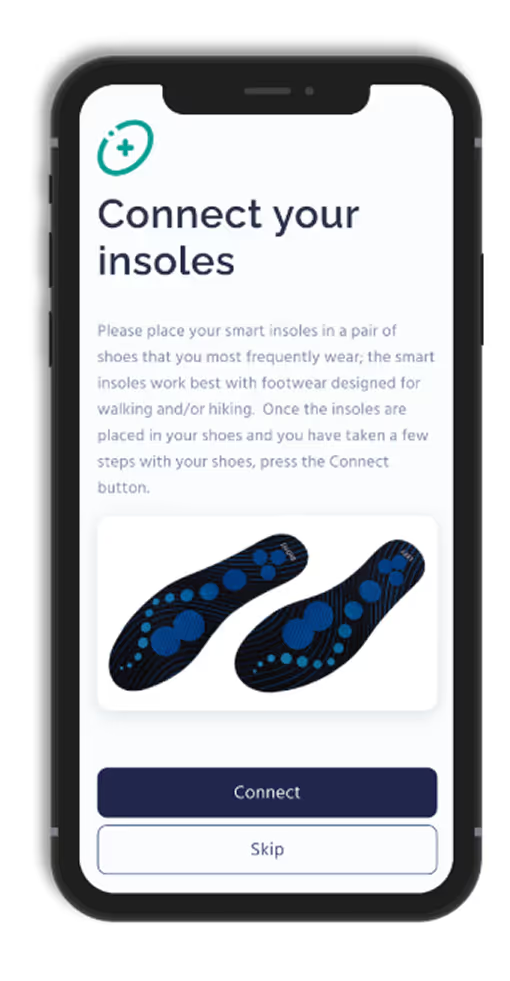
For illustrative purposes only, your insoles may look different
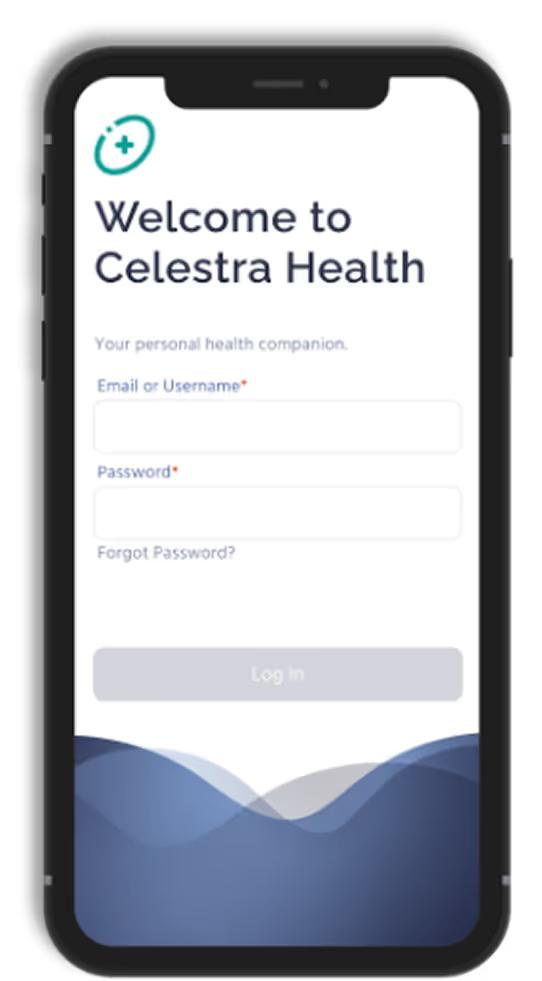
Log In
Open the app and log in using the email address and password you used when creating your account.
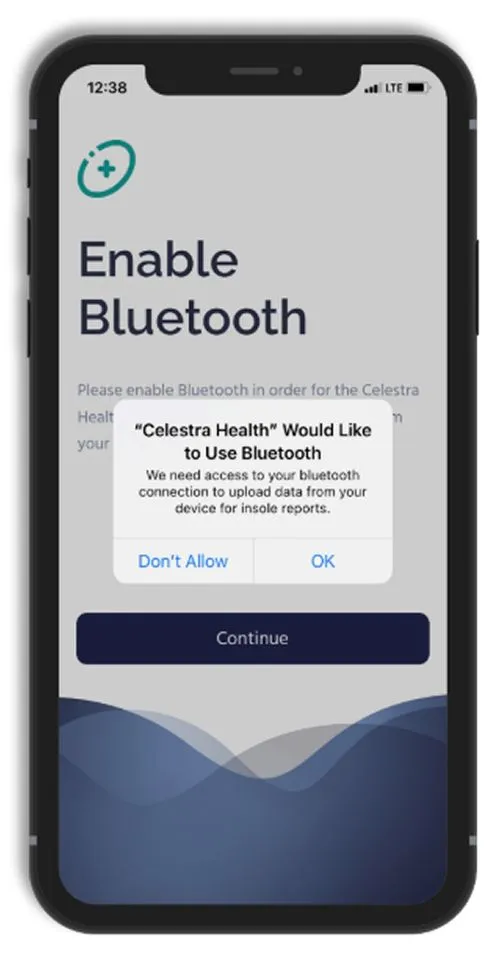
Enable Permissions
  • For iOS users: Enable Motion & Fitness and allow access to Apple Health.
  • For Android users: Enable Activity Recognition permissions.
Connect Your Insoles
Turn on Bluetooth, and follow the app's instructions to connect your smart insoles.
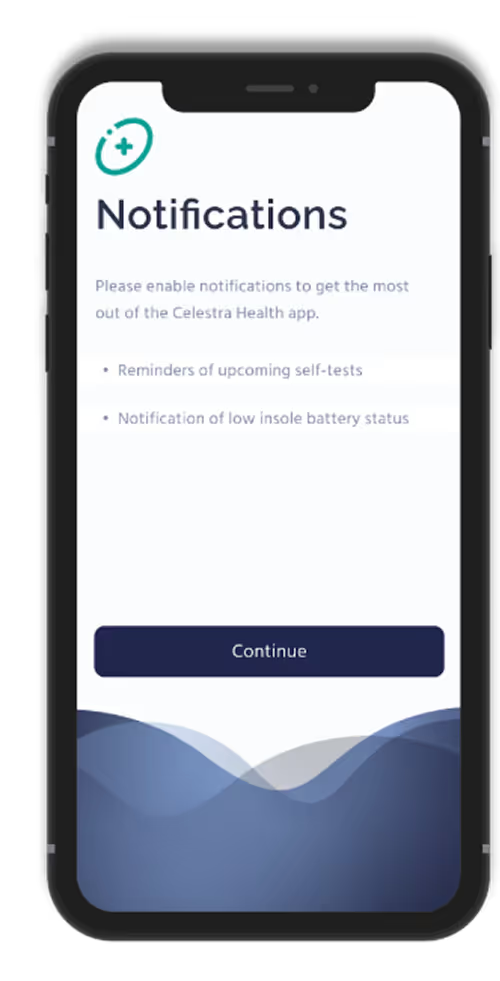
Enable Notifications
Enable push notifications to stay updated on reminders and activity progress.
For illustrative purposes only, your insoles may look different
Start Walking Sessions
When you’re ready to perform a walking session, tap ‘Start’ on the Ad Hoc Walking task card in the app.
Smart insoles are designed to fit comfortably into any pair of closed shoes
Need Help?
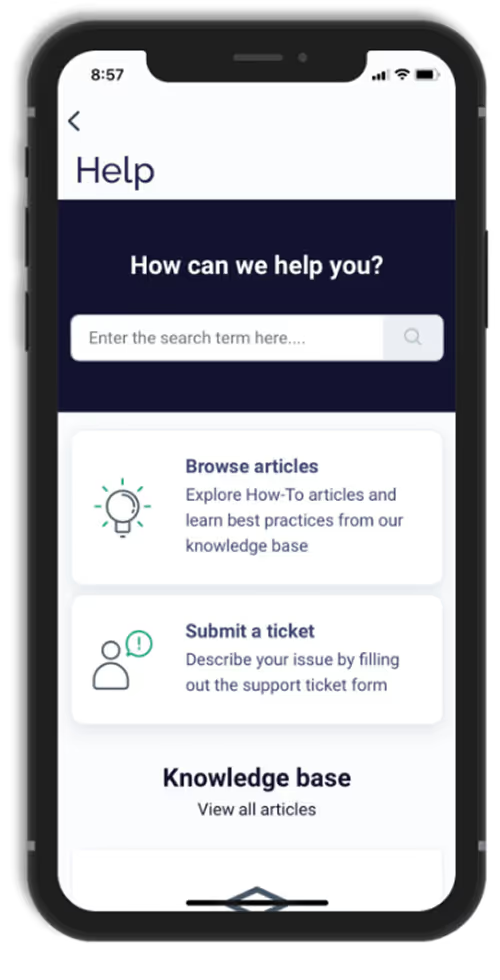
Should you need to contact Celestra Health support for any reason, you can submit a ticket through the Help section of the app by tapping the Submit A Ticket card and filling out the form. A Celestra Health representative will typically respond within one business day.
A fully charged device (smartphone, tablet, or laptop) with a working camera, microphone, and stable internet connection.
A quiet, well-lit space that is free from distractions.
Good lighting so your face is clearly visible; having a small flashlight or your phone’s flashlight nearby can help with skin, scalp, or joint checks.
Flexible device positioning so you can easily adjust or prop up your device hands-free if the research staff asks to view specific areas (such as your face, hands, or scalp).
Space to move in case you are briefly asked to stand or walk a few steps.
Your medication information, including your current steroid(s) and BENLYSTA® (belimumab) — either the medication bottles or a list with doses and schedule.
Time to focus without interruptions so the visit can be completed comfortably.
Before Your Video Call:
Schedule your visit
Use the scheduling link on your PicnicHealth Research Dashboard or the link sent to your email.
Tip: Search your inbox for “New task for the BEACON-SLE Study - schedule your remote visit” to find the scheduling email.
Check your confirmation
You’ll receive an email with your appointment time and instructions for joining the video call.
On the Day of Your Video Call:
Join the call
Click the Zoom link sent to you by email or text message, or use the link available on your research dashboard.
Meet with the research staff member
  • They will ask you structured questions about your health and any lupus symptoms you’ve experienced over the past 30 days.
  • If needed, they may guide you through a few simple visual checks (such as looking at your skin, hair, joints, or mouth). You can always tell them if you’re not comfortable with anything.
Receive Compensation
You’ll receive up to $60 for completing your visit.
See More

Related Articles

View All

Take control of your care.

Understand your health clearly. Walk into every appointment prepared.